Cúirt International Festival of Literature

 
IrishEnglish (United Kingdom)
  
A+ R A-

Cúirt New Writing Prize Winners


Cúirt International Festival of Literature is delighted to announce the winners of the Cúirt New Writing Prize 2012.

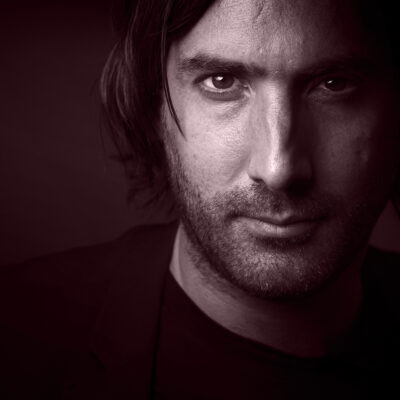
Poetry: Kevin O'Shea

Kevin_OShea-photo_credit_Boyd_ChallengerKevin O’Shea lives on the edge of Connemara, in Moycullen, still within earshot of the old Galway-Clifden railway. Having retreated from the world of technology to timidly confront the world of imagination he was short listed for Over The Edge New Writer of the Year  in both 2009 and 2010. He has been published in Irish Left Review, Ropes, Pen Tales and poetry anthologies Behind the Masks and Mosaic. For 2012 he has been accepted for publication in THE SHOp and Northern Liberties Review while his debut collection The Art of Non-Fishing is scheduled for publication by Doire Press. Two of Kevin's poems are presented below.


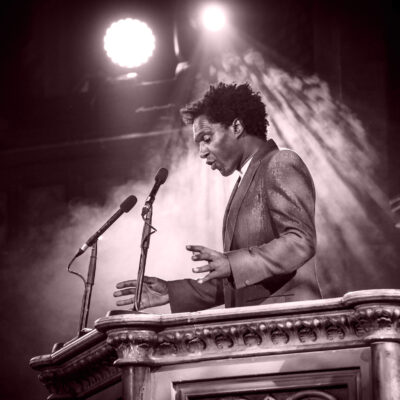
Fiction: Eamon Kelly

Eamonn_Kelly-Photo_Credit_Boyd_ChallengerEamonn Kelly is a native of Dublin, and based in Galway since the 1980s. His stage plays Frugal Comforts, Religious Knowledge, A Room of Her Own and Parental Guidance were first produced in Galway in the 1990s. He has written for television and radio, scripting in RTE on the sitcom, Upwardly Mobile, and providing contributions to Lyric FM’s Quiet Quarter. Eamonn is an Arts graduate of NUI Galway and has contributed articles on arts and culture to the Irish Times, and written about theatre and film for Books Ireland. His prize-winning story, 'Mapping the Moon', is featured below.


The Cúirt New Writing Prize is kindly sponsored by Tig Neachtain in memory of Lena Maguire, and Kevin and Eamonn will receive cash prizes of €500 each. They will also have the opportunity to read during the festival at the Cúirt/Over the Edge Showcase event, which takes place in the Town Hall Theatre, on Friday 27th April at 3pm.


Shame
by Kevin O'Shea

Dr Henry William Frauenthal
his paunch weighing-in at eighteen stone
stands on the brink, vacillating,
chooses to leap onto the fragile bones
of women and children only
in Titanic lifeboat number five.

Elia Kazan
in his fifties and peaking,
names eight
Un-American actors
for the House Committee,
sees On The Waterfront through,
lives with both
for forty more years.

Life becomes a hoard of private shames
we keep battened down
below the surface
icebergs
waiting.

Kinvarra at Solstice
by Kevin O'Shea


Low December sun
rays spearing
The Full Tide Inn
ruthlessly expose
fingerings on glasses
like touching tales
on Sunday Miscellany
tug at the edges
of surface cracks
in marginal families
as Christmas looms.

Still, the banana bread
is good. Outside
a double rainbow
frames the smokers
crowding the lobby
of Conoles pub.
The hail arrives.


Mapping The Moon
By Eamonn Kelly

The boy hunkers down over a large white sheet of paper spread out on the garden path and studies the map he has drawn in pencil and marker. The noonday sun glaring off the white paper causes him to squint. He darkens a line on the map with a small stub of pencil, sitting back on his haunches to judge the mark from a better perspective.
The map is of his father’s house. He has drawn the plan in great detail, even including cupboards and the main items of furniture in all the small rooms of the terraced house.
As his eyes follow the diagram he visualises the rooms. He sees the stairs at the end of the hall leading up to the small bedroom where his mother and his elder sister Marion used to sleep. His father sleeps alone up there now.
There are two large rooms off the hall, the front room and the back room. The back room is his bedroom. Only himself and his younger brother Derek sleep there now. All the men used to sleep there. His father in one bed, and himself, Derek and his elder brother David in the other. When uncle Vinny, his mother’s brother, came to stay, he slept in the back room too, in a camp bed over by the window.
The boy smiles now. He likes to remember those times when everyone was in the house. There was always something happening, always excitement. But now the house is quiet. David went to England with Uncle Vinny, and Marion got married. At night the boy can hear the creak of his father’s footsteps on the stairs leading up to the small bedroom.
At the end of the back garden there is a stone seat his father made, a slab of granite, a windowsill from a demolished house, set across two concrete blocks. The seat is represented on the map as a simple rectangle. His eyes rest now on the rectangle as he recalls the night of the Moon-landing when his father had taken him out to the backyard to look up at the Moon. His father sat on the stone seat and the boy sat on his lap. It was late and the boy was tired, willing himself to stay awake in his father’s arms, gazing up at the full Moon as his father murmured the wonderment of what they had witnessed.
His eyes now follow the map away from the stone seat and up the curving garden path towards the house. He can see it all as if he is there. As if he is floating above the garden like a spirit. He pretends he is a ghost and is now outside the back door of the house. He closes his spirit eyes and melts through the door into the parlour. He can see his father, his head lowered into the newspaper. The boy floats before the man, admiring the oiled, slicked back hair. The boy is seized by a sudden rush of love. Just as quickly the love sours to sorrow. He turns away, a swimmer casting off through the buoyant air, slipping through the parlour door, gliding up through the house, halting at last above himself hunkered down over the map,  his eyes gazing at the square representing his father’s chair.
He recalls the dream that had woken him in a sweat the night before. He dreamt he was at the seaside with his father. The tide was out and the sky was black. He could see the Moon, huge and pasty white in the black sky. He heard his mother calling them in for their tea. He turned to find himself in the parlour. It was someone’s birthday. His father was at the table tying string around a long brown cardboard box. His father lifted the box in both arms and moved sideways out the back door into the night. Overhead the Moon sat in the black sky, a sliver of disc, like a Moon in a child’s story book.
Tiring of the map, the boy stands up and carefully places the stub of pencil behind his ear. A pop song plays faintly someewhere in the distance. He strains to catch the tune, but something changes in the still air and the melody ghosts out of earshot. He wanders down the short garden path and stands at the gate, the sun beating down, cutting a deep black shadow at his feet.
Across the street a black Labrador sits panting in the full glare of the sun, gazing over at the boy in mute desperation. A bumblebee as fat as a grape meanders drowsily over the hedge into the narrow garden fronting the house. He watches the furred bee clamber among the cool petals of a yellow flower. Away up the street a man’s figure blurs and melts in the heat. The boy watches as the man rounds the corner and disappears.
He sighs and turns to look back into the house. The front door is wide open, the sun burning a laser of summer into the gloomy hall. He stands for a moment gazing into the shadows, like a visitor just arrived to find no one at home.
He wishes now he had gone to Marion’s house with Derek to help her mind her new baby. He thought now that Marion would probably take Derek out for the day, to the park, or even to the beach.
He sees himself and Derek on the beach, standing on the edge of the waterline, waves easing over their feet as they look out towards the blue horizon. Derek wonders where Heaven is. The boy tells him it’s up in the sky. Derek looks up in the sky and says, ‘Where?’ Derek is only five and doesn’t know he can’t see Heaven. So the boy tells him Heaven is invisible. Derek looks up at the sky again, a small frown wrinkling his child’s face.
The boy turns away from the thought and looks at the soft downy hairs on his forearm. He strokes his thumb up through them, against the grain, watching the hairs stand. He examines the freckles on his arm on down to his hand, looking at the creases on his knuckles, flexing and curling his fingers to see the effect of the action on the creases. He turns his hand over and looks at the lines on his palm. He traces his finger along a line that Marion said was his life line. Marion said it was long and that it meant he would live a long life. He turns his hand over again and looks at the back, comparing the tanned skin to the paler skin of the palm of his other hand. He looks from one hand to the other, comparing them, looking at them as if they are objects he has found on the road, turning them over, wondering at their possible uses. He stops still for a moment then, struck by the strangeness of his body, the strangeness of being inside a body.
His attention is drawn to a smear of black paint on the pad of his thumb. Earlier he had been pressing the blisters in the black paint on the front door. The blisters flattened in the centre and looked like Moon craters. He had found and pressed enough blisters to create a kind of black moonscape on the front door.
He knows how the Moon should look. At the time of the Moon-landing he had traced a map of the moon from a map printed in one of the newspapers - two great circles set side by side showing both sides of the Moon with its mountains and craters illustrated and a small cross indicating the landing site of Apollo 11. He had laid a sheet of greaseproof paper over the printed map and traced the drawing in dark pencil, conscientiously delineating all the major craters in black crayon.
When the map of the Moon was traced out, he pinned the tracing on the wall over his bed. His father smiled when he saw the map and asked him why had he simply not cut the drawing from the paper and pinned that up on the wall. The boy frowned, unable to find an answer. His father looked at him and left the room, shaking his head and grinning. The boy felt stupid and ashamed and looked at the map on the wall, thinking it must be wrong in some way that only his father could see.
The recollection makes him feel stupid and ashamed all over again. He wishes he could see the map again, to see was it as perfect as his memory suggested. He can’t remember the day when it was no longer on the wall. He remembers it being there, but can’t remember losing it. Maybe his father had burnt it that time he made the fire in the backyard. Piled it on with the old clothes and shoes and the other things that were no longer needed, the thick black smoke funnelling into the clear blue sky.


Latest News

The 2013 Cúirt Programme of events will be launched in the House Hotel, Lower Merchants Road in the Latin Quarter, on Tuesday March 12th 2013, at 6pm.


Cúirt International Festival of Literature is delighted to announce the winners of the Cúirt New Writing Prize 2012.
Read more...
 

Join our Mailing List

Search Cúirt

Cúirt Tweets

Friends of the Festival